
An in-depth exploration of the illegal numbers game Jueteng and the '16 Bet' strategy within its operation.
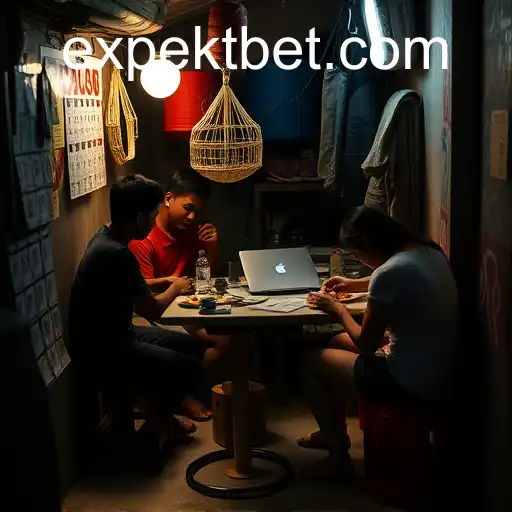
Understanding Jueteng: A Cultural Phenomenon and Illegal Enterprise
Jueteng is more than just an illicit numbers game; it's a deeply ingrained cultural phenomenon in the Philippines. Often conducted in alleyways and local neighborhoods, Jueteng has become an intricate part of local folklore and an underground economy. The game has been around for decades and continues to thrive, despite numerous crackdowns by authorities.
The Game's Mechanics
At its core, Jueteng involves betting on a combination of numbers, typically ranging from 1 to 37. Players choose a pair of numbers, and if these match the numbers drawn by the game's organizers, they win a cash prize. The simplicity of Jueteng, combined with the low cost of participation, makes it an attractive pastime for people from all walks of life, particularly in rural areas where formal entertainment and jobs might be scarce.
Jueteng's Societal Role
Many argue that Jueteng serves a dual purpose in Philippine society. It acts as an informal charity institution, as portions of its proceeds often go towards local community projects or helping impoverished families. On the other hand, it is seen as a corrupting force, funding illicit activities and often involving local government officials or corrupt law enforcement officers who turn a blind eye in exchange for a cut of the profits.
The Play Strategy: What is '16 Bet'?
One intriguing aspect of Jueteng that receives less attention is the betting strategy known as '16 Bet'. In the context of Jueteng, the 16 Bet is a popular strategy where bettors split their stakes across a set of 16 possible number combinations. The hope is that by covering a wider spread of potential winning numbers, the odds of hitting the correct combination increase, at least in theory.
The 16 Bet strategy reflects a structured approach to gambling in Jueteng, which contradicts the perception of the game as entirely random or luck-based. It shows how players try to leverage basic statistical assumptions to better their chances, much like more formalized betting systems in legalized gambling setups.
The Popularity of '16 Bet'
This method has gained traction among the more seasoned Jueteng players, who view it as an essential tool in increasing their potential payday. However, it also comes with pitfalls. Because Jueteng is illegal, there are no official checks or balances, meaning players have to trust that the results are honestly drawn. There is always the risk of manipulation by organizers to prevent frequent payouts.
Legal and Ethical Implications
The persistence of Jueteng, and strategies like the 16 Bet, bring about numerous legal and ethical questions. Despite persistent efforts by law enforcement to clamp down on the activity, Jueteng continues to operate due to deep-rooted cultural acceptance and economic desperation. Critics argue that without addressing the socioeconomic factors that drive people to participate, efforts to eradicate Jueteng will remain futile.
Moreover, the involvement of public officials in protecting or even running Jueteng operations exacerbates corruption issues, undermining trust in government institutions. This aligns with broader discussions on governance and the rule of law in the country.
Efforts Towards Regulation
Given its popularity, there have been debates about legalizing Jueteng, turning it into a regulated and taxed venture. Proponents suggest that bringing Jueteng out of the shadows would provide the government with additional tax revenues, ensure better regulation, and reduce the opportunities for local government corruption.
However, detractors argue that legalizing Jueteng would merely normalize gambling as a societal vice, potentially leading to increased problem gambling and other social ills. Moreover, the challenge remains as to how to effectively regulate an activity that thrives on its informality and grassroots nature.
Cultural Implications
Jueteng is not just a game but a microcosm of broader sociocultural dynamics in the Philippines. While it poses challenges in terms of law enforcement and governance, it also speaks to the resilience and adaptability of communities in finding ways to sustain themselves. The emergence of strategies like the 16 Bet signifies the human inclination to optimize outcomes, even within the constraints of an informal setting.
Understanding Jueteng and its relation to strategies such as the 16 Bet is crucial for comprehending the broader social fabric and economic realities faced by many Filipinos. Whether Jueteng remains in the shadows or emerges into the light through potential regulation, its role in Filipino society remains a significant, albeit complex, one.